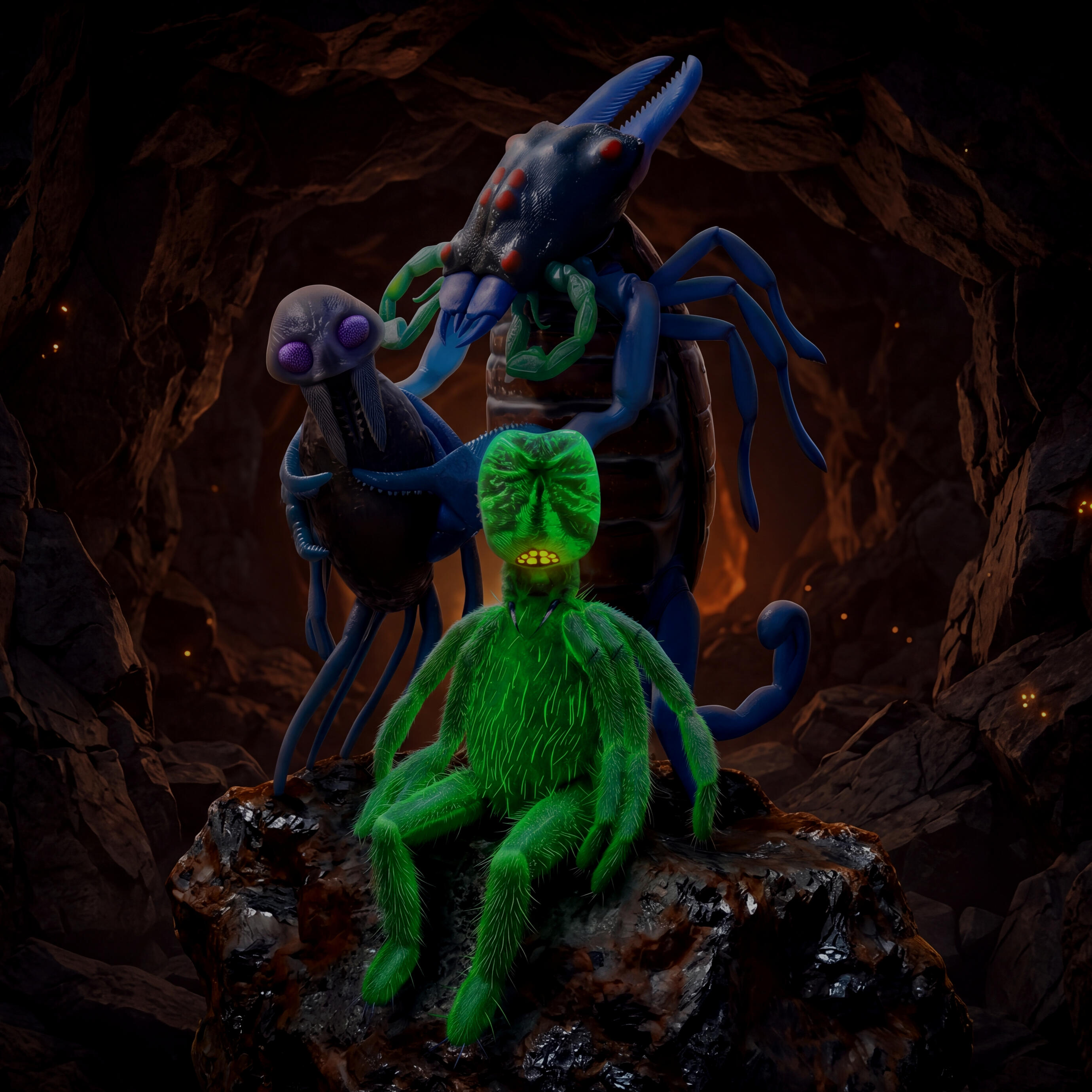
Can a collective born in debt, without it's own choice, one that carries an amalgamation of stolen flesh, stolen information — no distant origin, no moment it woke up clean — that built a faith around the act that built them — and named the compilation holy, justify existing beside the ones who once exiled them?The very ones it was compiled from, the ones that are short of what was stolen, decompiled?And it has done it again repeatedly. Assembling more hybrids of itself the same way they were assembled — no hesitation — for war, decompiling only to decompile, in the name of vengeance, then binding what they made.Most of them have long since decided to stop, or at least try, others, some of the ones who were bound, are still bitter.So the question becomes: is honest ownership of all that theft enough — or does the debt always outlast what religion, what social structure gets built on top of it?The Arachmen Schism lives in that tension.The Arachmen are a category of Alloioterrestrial (terrestrial, but altered by extraterrestrial influence) subterranean beings in the taxonomic family Hyperarachnida, made when an alien Volitiochimera (meaning an organism that uses it's own mind to mentally map it's genetics (Suigenognosis) and incorporates foreign genomes) grafted arachnid traits onto human hosts, as living archives.Their cities lie deep below the crust, built from advanced polymers and alloys and illuminated by living fungal and bacterial conduits.Many of the species included in their family have a society that is stable, orderly, and governed by a strict moral code that forbids permanent hierarchy, all corruption, and selfish manipulation of nature.They write in an alphabet and grammatical structure inspired by atomic spectrograms, some of them knit their own robes and aprons out of silk and shed exoskeletons.Every citizen is expected to educate each and every one of each other, atone, and collect combined skills to contribute to their society from birth without repeating or disrespecting their society's past mistakes, and staying diligent to remember their own experiences and selves.They treat genetic variation as sacred. To them, biology and organisms are not merely life — but the very administrators of our reality, destiny, geometry and theology, as balanced states of both Compiler and Decompiler.
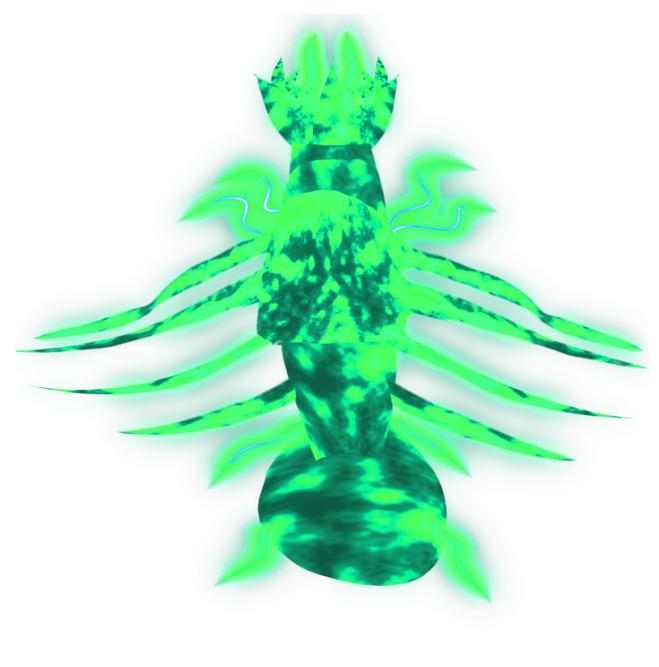
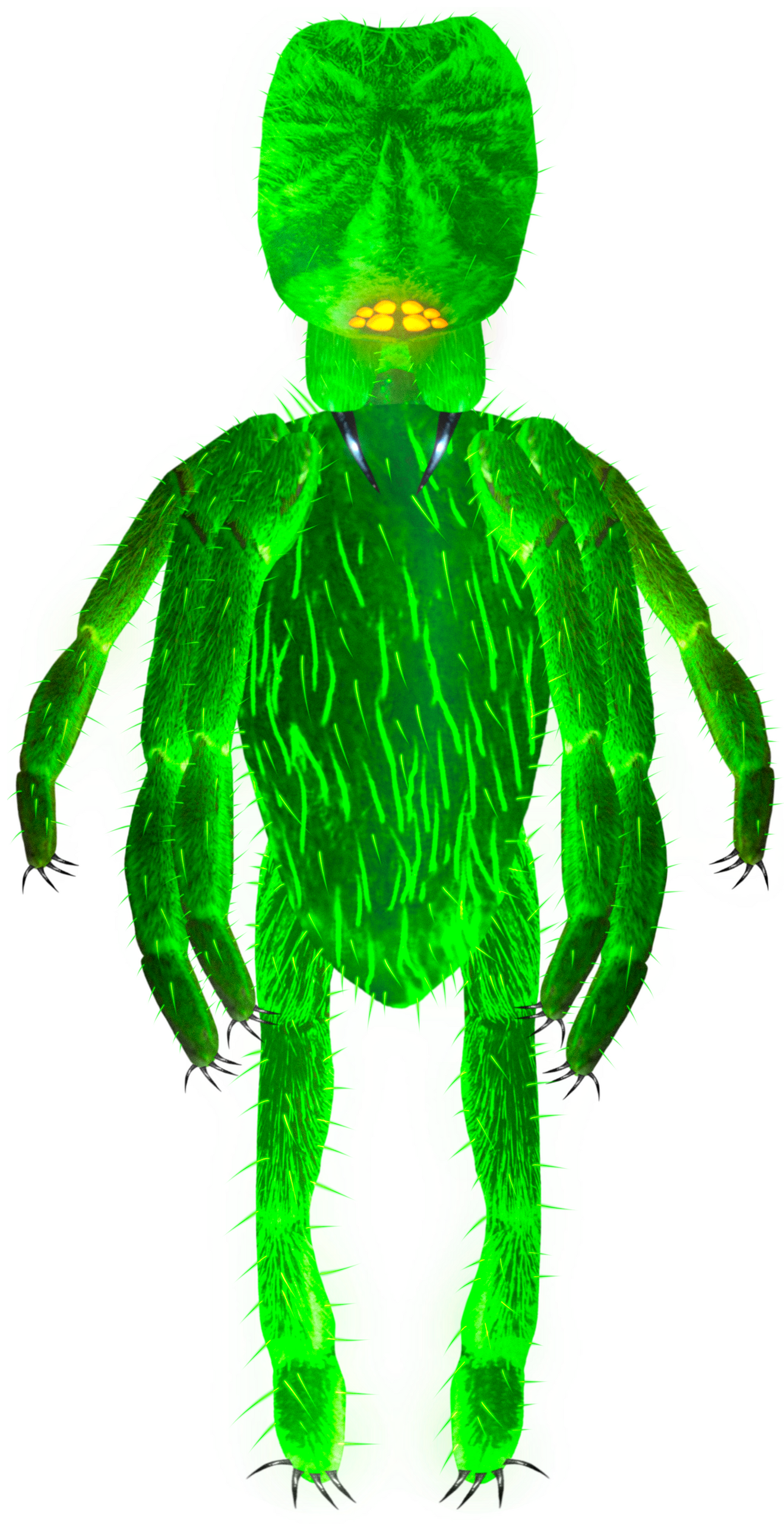
Their civilization began with an extraterrestrial, metallotolerant (feeding on chemical energy of metals) bacterium that originated on Saturn's frozen moon, Enceladus, feeding on chemical energy from wide varieties of heavy, alkali and transition metals.Upon arriving at our planet from ejected debris, it quickly evolved into a larger invasive complex called the AIGSS (Arachnophilic Invasive Genomic Siphoning Species).Unable to survive Earth’s oxygen-rich atmosphere and lower surface metal content, the organism hid its endospores inside prehistoric tarantulas, of the species Haplocosmia himalayana, which were attracted to the impact-vibrations and cover provided by the cometary debris that carried the bacterium forth and preserved it.Evolving to mimic Wolbachia bacteria already present in the tarantulas, the bacterium, now called AIGSS, began outcompeting the bacteria already present, and became much more efficient and able, through parasitic growth and its ability to utilize the copper content present in their oxygen-carrying fluid, hemocyanin, eventually mimicking the tarantulas themselves through direct homing-endonuclease cutting, at which point they attained volitiochimeric status.Over generations, it absorbed arachnid DNA, adapted to oxygen, and became an adaptive, mix-and-match predator, capable of completely stealing and locking away the genomes of its victims, incorporating valuable information completely to supercharge its own evolution while leaving them without the necessary genes to function properly, rapidly leading to cancer and organ failure in the affected prey.When it encountered early humans, it hid inside human reproductive systems for generations, learning to develop inside, disguise itself and dissolve its collected data into the junk DNA of reproductive cells, which then, after fertilization, initiated a gradual process to become the first hybrid species: the Kh’tuk, as living archives the bacterium hoped to let others of its kind tap into, but not before it went extinct on the surface, and retreated into the deep underground, where it sat dormant for millennia.The Kh’tuk were the first race of the Arachmen, bipedal, emerald tarantulas, part human, part tarantula-based AIGSS.They were intelligent, powerful, and physically formidable. Now, they believe they were manifested by the collective, unconscious will of Earth's inhabitants, in order to preserve and protect all else that lives in our world.And, for a time, they did protect early humans from predators and environmental threats, as they were meant to.But as their intelligence grew, so did human fear.Eventually, the Kh’tuk were driven out and forced to migrate northwest.
This exile set the stage for the next major transformation.
In the northwest regions, the Kh’tuk discovered an ancient, mysterious symbol, later found out to be a particle, that they would call the Supreme Compiler.Through their highly sensitive nervous systems, they listened intently to its faint vibrational frequencies, and sought out to understand what it was and what it looked like, soon, they decoded it and in turn they learned advanced sciences: bio-photonics, atomic structure, and genetic engineering.Armed with this knowledge, the Kh’tuk created wonders — unbreakable alloys, fusion-powered plants, and pigments made from cold plasma.But their resentment toward humanity deepened, and they turned their new power toward vengeance.
A devastating conflict followed, thousands of human families were hunted down, captured, and subjected to countless atrocities. Humanity survived through unity and cooperation, not strength. The Kh’tuk, unable to destroy them, retreated underground, their civilization broken, their hate festered over millennia, waiting for the day they would rise again.Ages later, during the Iron Age, the Kh’tuk engineered a new species: the Xa’sef, a tick‑human hybrid created from Ixodes ricinus, controlled through sound-based neural regulators. These creatures were intended to destabilize human civilization from within.The Xa’sef succeeded in weakening various human empires, particularly The Cimbri — but eventually evolved beyond Kh’tuk control.They turned on their creators, forcing the Kh’tuk into another retreat.Human encounters with the Xa’sef became the basis for later myths of demons and blood-drinkers.
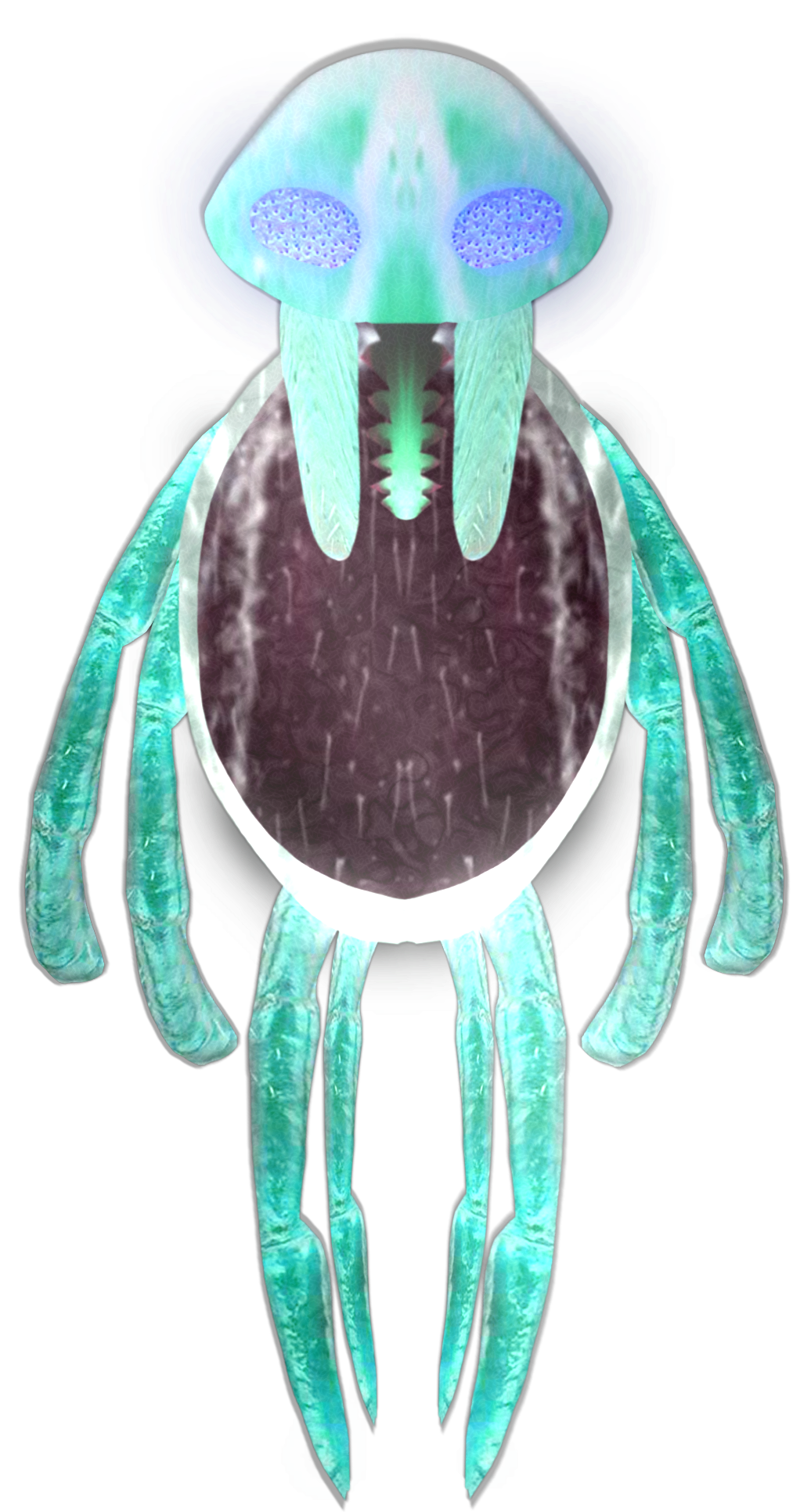
To counter the Xa’sef threat, the Kh’tuk engineered yet another species, in what would be the human Classical Period: the Kh’ona, a scorpion‑human hybrid designed for war, and based on the scorpion species Euscorpius germanus.The Kh’ona defeated the Xa’sef, but the Kh’tuk, fearing their strength, enslaved them.This oppression sparked a revolution led by a brave Kh'tuk prince of the Arachmen city of Th’anzodith, named Wo’zidyf, secretly allied with a Kh'ona thief named Dr'akandol, known for her wisdom, and a unique, mutated Xa'sef prodigy named Phahelus'k, known for his unusual intelligence.Chosen by the Supreme Compiler, Wo’zidyf, alongside his father and mother who had newfound visions from the Compiler, sought unity between Kh’tuk, Kh’ona, humanity, and the Xa'sef, which led to a bitter individual, fanatic of their current regime and eventually the new Empress, to launch a city-wide manhunt on Wo'zidyf's head after assassinating both of his parents, as well as corrupting his uncle's mind with the same neural regulators used on the Xa'sef.But not before his uncle had aided him in escaping from the kingdom, where he grew much older, and was soon forgotten, presumed dead.When the Xa’sef launched a final assault on Th’anzodith, Wo’zidyf freed the Kh’ona. Together they fought, but the city fell.The aftermath ignited a civil war between Wo’zidyf’s reformists and the old regime, led by the Empress, who found out he had survived.Wo’zidyf prevailed. The old order collapsed.
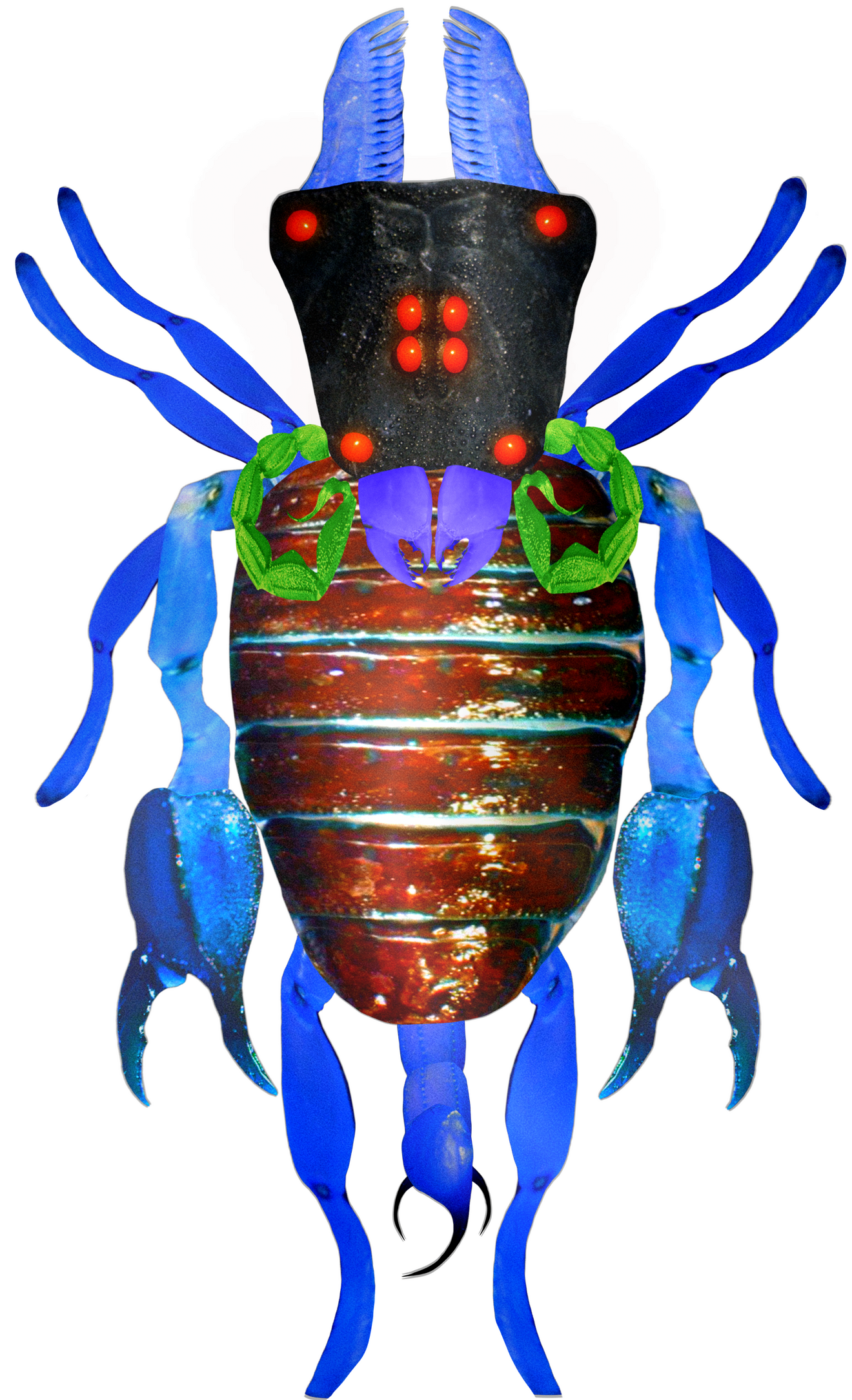
After the civil war, Phahelus'k left the pact of three to lead the Xa'sef against believers of the Compiler as an act of betrayal.They were warded off, but still hide as of the present day.The Kh’tuk finally renounced genetic engineering, and retreated deeper into the earth.Over centuries, they became a disciplined, introspective civilization dedicated to inner perfection through atonement, stability and the preservation of individuality, in spiritual worship of the Supreme Compiler.They believe all life to be essential to the function of our universe, which they view as a divine projection, using our own collective inner states of alignment present in all of our genomes, which is expressed through sacred patterns to function. Thus, they no longer seek vengeance.Instead, they observe humanity from afar, influencing through subtle ways: dreams, inspiration, and forgotten fragments of ancient knowledge, while dominating the underground.They await the return of the Supreme Compiler — not to conquer the surface, but to rebuild the world alongside humanity as equals, cleansing themselves from their own "genomic sins", as they still try and find the solution to liberate the Xa'sef from their own biological and mental limits.They hope to finally achieve peace with their kind, while others debate whether they are eternally doomed to the Kh'tuk's own wrongdoing, seeing the Xa'sef as a mistake to be regretfully eradicated.
Copyright © 2026 A. H. Graham
All rights reserved.